Why Mini Split Systems Need Repair
Mini split repair becomes necessary when these efficient systems develop problems that affect performance or energy efficiency. Common issues include weak airflow, poor cooling or heating, strange noises, water leaks, bad smells, and higher energy bills.
Mini splits are reliable and can last up to twenty years with proper maintenance. However, like any HVAC system, they can develop problems. The most frequent issues are dirty filters, refrigerant leaks, and electrical component failures.
Many problems have simple solutions. Basic troubleshooting, like checking power settings and cleaning filters, can resolve common issues without a service call. However, complex problems involving refrigerant, electrical components, or the compressor require professional expertise.
Call a professional for:
- Refrigerant leaks (hissing sounds, poor cooling)
- Electrical problems (burning smells, tripped breakers)
- Compressor issues (loud banging noises)
- Any problem that persists after basic troubleshooting
I’m Colin Matei, owner of Clean Air Heating & Cooling. I’ve helped hundreds of Whatcom County homeowners with mini split repair, and I know that most issues are preventable with regular maintenance and by recognizing early warning signs.
Signs Your Mini Split Needs Repair

Recognizing warning signs early can save you from a complete system breakdown and lead to simpler, less expensive mini split repair work. Here’s what to watch for.
Performance Issues
- Weak Airflow: If you barely feel air movement even on high, it often points to a clogged filter, dirty coils, or a failing blower motor.
- Poor Cooling or Heating: If the unit runs constantly but you’re still uncomfortable, you may have low refrigerant levels or a failing compressor.
- Inconsistent Temperatures: When one room is comfortable and another isn’t, it could signal an issue with a specific indoor unit or a faulty sensor.
- Short Cycling: The system turning on and off in short bursts wastes energy and strains the compressor. This can be caused by a dirty filter, low refrigerant, or an oversized unit.
- Increased Energy Bills: A sudden jump in your utility costs is a clear sign your system is working harder than it should, often due to dirty components or refrigerant issues. Learn more about how this affects your costs in our guide on Mini Split Cooling Efficiency.
Sensory Clues
Pay attention to what you hear and smell, as your system uses these clues to signal problems.
- Unusual Noises: Grinding suggests failing mechanical parts. Squealing or rattling often points to a blower motor issue or loose components. Loud banging from the outdoor unit can mean compressor trouble. Hissing is a critical sign of a refrigerant leak.
- Unpleasant Odors: Musty or moldy smells indicate moisture isn’t draining properly, leading to biological growth. A burning odor signals a potentially dangerous electrical problem; turn off your system immediately and call a professional.
For a deeper dive, our article on 8 Signs Your Mini-Split System Needs Repair covers more details.
Visible Problems
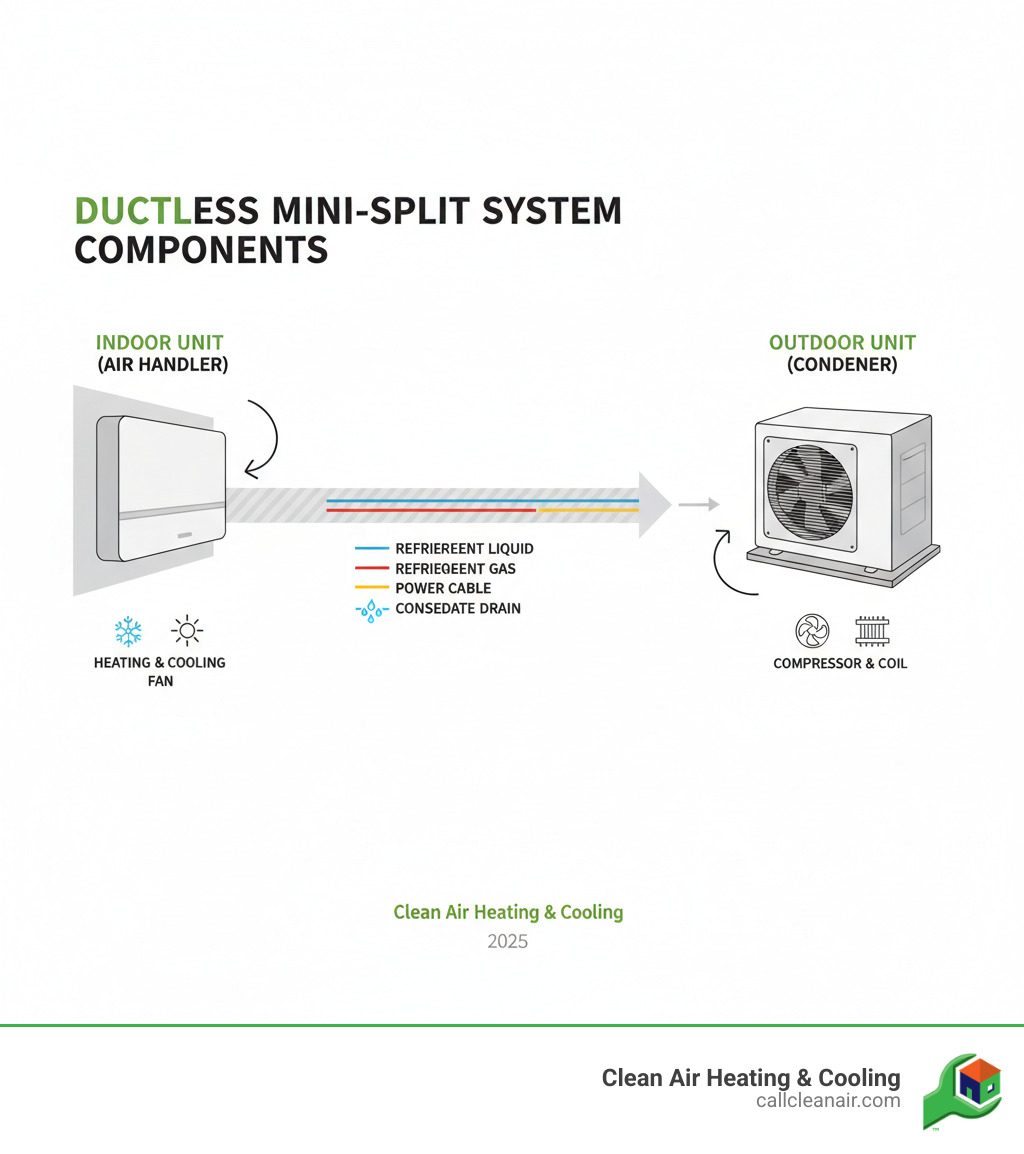
- Water Leaks: Dripping from an indoor unit is never normal and usually means a clogged condensate drain line or a cracked drain pan.
- Ice or Frost Buildup: Ice on either the indoor or outdoor unit is a red flag, typically indicating restricted airflow (dirty filter) or low refrigerant.
- Blinking Error Lights: Modern units use these lights to self-diagnose. Check your owner’s manual to decode the error and identify the problem.
- Damaged Outdoor Unit: Bent fins, a dented casing, or exposed wiring can seriously impact performance and safety.
Your 5-Step Mini Split Troubleshooting & Repair Guide
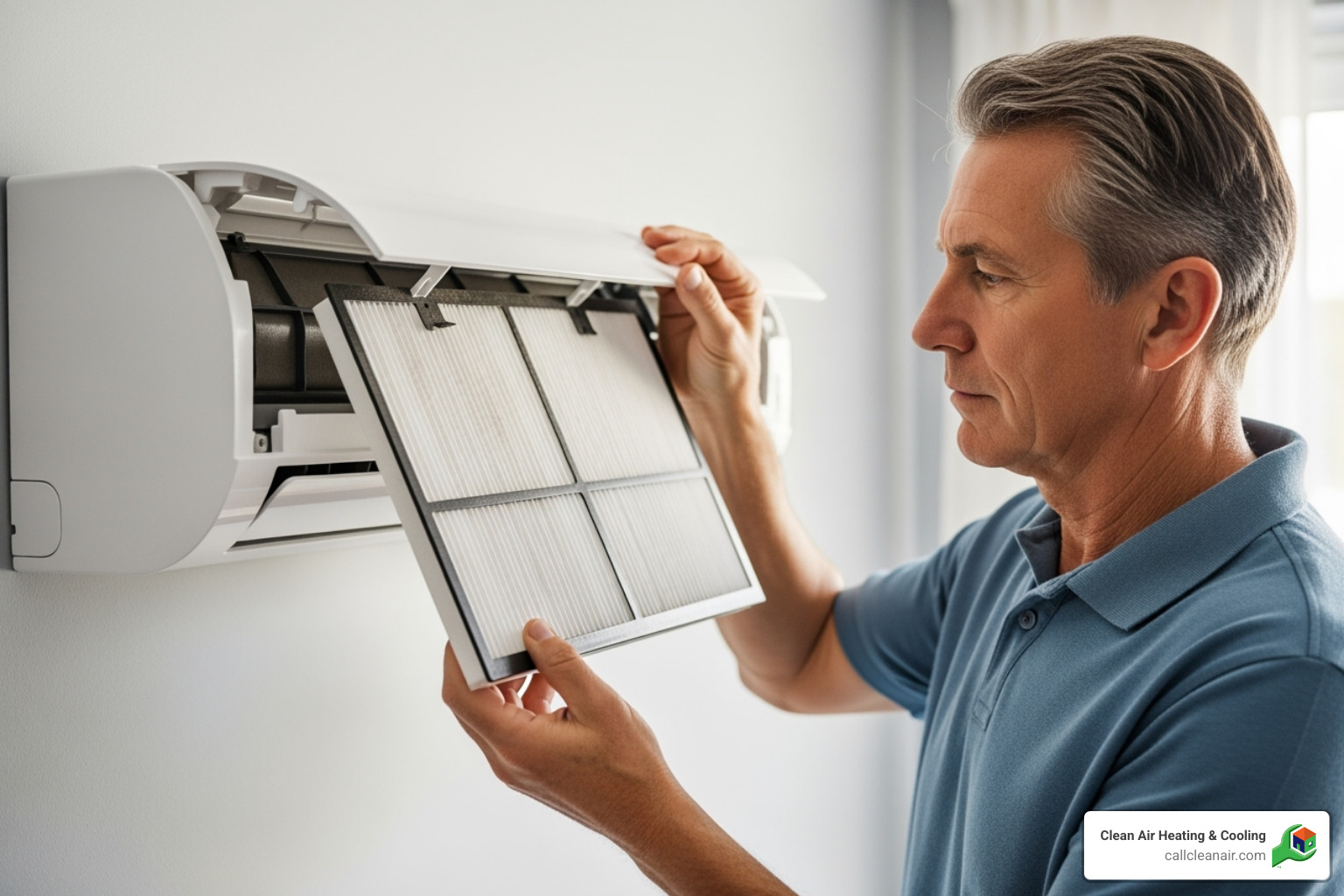
Many mini split problems have simple solutions. Follow these five steps to diagnose the issue, handle easy fixes, and know when to call for professional mini split repair.
Step 1: Perform Basic Power and Setting Checks
Before assuming the worst, check the fundamentals:
- Thermostat Settings: Ensure the remote or thermostat is in the correct mode (cool/heat) and at the right temperature. Try replacing the remote control batteries if it’s unresponsive.
- Circuit Breaker: Check your home’s electrical panel. If the breaker for the mini split has tripped, reset it once. If it trips again, stop and call a professional, as this indicates a serious electrical fault.
- Power Switch: Verify the outdoor unit’s power switch, usually located in a box near the unit, is in the “on” position.
Step 2: Inspect and Clean the Air Filters
Dirty filters are the number one cause of mini split problems, leading to reduced airflow and icing up. Fortunately, cleaning them is easy.
How to clean filters: Open the indoor unit’s front panel, slide out the mesh filters, and rinse them with lukewarm water. Let them air dry completely before reinstalling. For detailed instructions, see our guide on Cleaning Mini Split Heat Pump.
For maintenance frequency, clean your filters every 1-2 months, or more often if you have pets or allergies.
Step 3: Clear Debris from Indoor and Outdoor Units
Your system needs clear space to operate efficiently. Clear away leaves, dirt, and any other debris from around your outdoor unit, maintaining at least two feet of clearance. Also, ensure nothing is blocking the vents on your indoor unit.
Step 4: Identify Issues That Require a Professional
If basic troubleshooting doesn’t work, the problem likely requires an expert. Look for these signs:
- Refrigerant Leak Signs: A hissing sound, poor cooling performance, ice on the outdoor unit in summer, or an oily residue near the unit. Refrigerant handling requires EPA certification and is not a DIY job.
- Electrical Fault Symptoms: A burning smell, frequently tripping breakers, or a unit that won’t power on. These are hazardous and demand immediate professional attention.
- Compressor Failure: Loud banging or grinding noises from the outdoor unit signal a failing compressor, a complex repair that requires a technician.
When you see these symptoms, it’s time for professional Ductless Mini Split Repair.
Step 5: When to Call for Professional Mini Split Repair
Knowing your DIY limits protects you and your system. While you can clean filters and check power, leave refrigerant and electrical work to certified technicians due to serious safety risks.
If basic troubleshooting fails, call a professional to prevent further damage. Attempting complex repairs can turn a minor issue into a major one. Early intervention often saves money in the long run. When you’ve reached this point, contact us for professional Mini Split AC Repair.
What to Expect from a Professional Repair Service

When you call a professional for mini split repair, understanding the process helps you know what to expect. At Clean Air Heating & Cooling, we prioritize getting your system running efficiently while keeping you informed.
The Professional Diagnostic Process
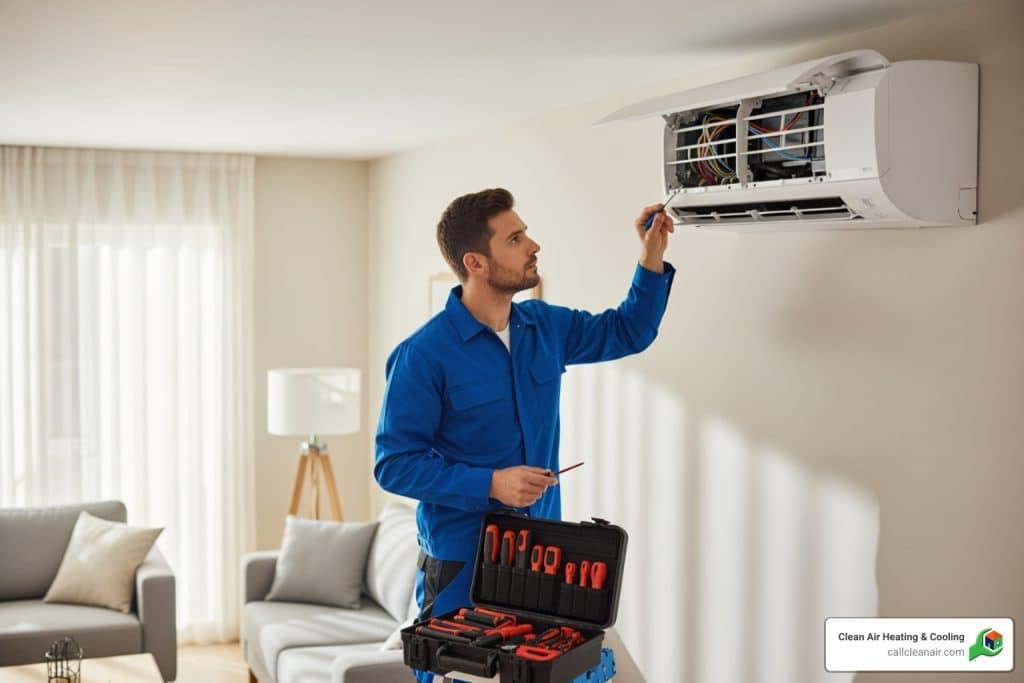
A technician will perform a thorough system inspection of both indoor and outdoor units. Using specialized diagnostic tools like leak detectors, pressure gauges, and multimeters, they will pinpoint the exact cause of the problem. Once the issue is identified, the technician will explain the diagnosis in plain English and provide a clear, detailed estimate before any work begins. We believe in transparent pricing with no hidden fees.
Common Professional Mini Split Repair Services
While every repair is different, some are more common than others:
- Refrigerant Leak Repair and Recharge: We locate and fix the leak, then recharge the system to precise manufacturer specifications.
- Compressor Replacement: This is a major repair that our skilled technicians handle efficiently to restore your system’s operation.
- Blower and Fan Motor Repair/Replacement: We address issues causing weak airflow or strange noises, recommending the most cost-effective solution.
- Electrical Board Repair: We fix or replace the system’s malfunctioning “brain” to resolve erratic behavior or shutdowns.
- Condensate Drain Line Clearing: A simple but crucial fix to stop water leaks from the indoor unit and prevent water damage.
How Much Does Mini Split Repair Typically Cost?
The final price of a mini split repair depends on the type of repair, system age, part availability, and labor requirements. We use genuine manufacturer parts to ensure reliability and protect your warranty.
For perspective, leak repair typically costs between $300-$1,000, depending on the leak’s complexity. Regular maintenance, which costs $125-$400, is the best investment to prevent costly repairs. You can learn more in our guide on What Is the Average Cost of Mini Split Repair?.
We know unexpected repairs can be a strain, which is why we offer flexible financing options. You can explore our many financing options – Pre-Qualify Safely Online with Clean Air to help manage costs.
Is It Better to Repair or Replace Your Mini Split?
Deciding between a costly mini split repair and a full replacement is a major decision. The right choice depends on your system’s age, condition, and the repair cost.
Comparing Repair vs. Replacement
This table can help you weigh your options:
| Factor | Repair If… | Replace If… |
|---|---|---|
| Age | System is under 10 years old. | System is over 15-20 years old. |
| Repair Cost | Cost is less than 50% of a new unit. | Cost is over 50% of a new unit. |
| Efficiency | System has a high SEER rating. | System is inefficient, leading to high bills. |
| Frequency | This is the first or second major repair. | System breaks down frequently. |
Age is a primary factor. A repair usually makes sense for a system under 10 years old. However, once a unit is over 15 years old, replacement is often the smarter long-term investment. The 50% rule is a helpful financial guide: if a repair costs more than half the price of a new system, replacement offers better value.
When to Consider an Upgrade
Sometimes, replacement is the best option even if a repair is possible.
- System Age and Lifespan: Mini splits last about 15-20 years. If yours is approaching this age, you’re on borrowed time, and even small repairs may not be worthwhile. Learn more on our How Long Do Mini Split Systems Last? page.
- Frequent Breakdowns: If you’re constantly calling for mini split repair, the cumulative costs and inconvenience can make replacement a more appealing choice.
- Energy Efficiency: Modern mini splits are far more efficient than older models. A new system can lead to significant savings on your energy bills, helping to offset the initial cost.
- New Features: Today’s systems offer smart home integration, quieter operation, and better air filtration. An upgrade can greatly improve your home comfort.
If you’re considering a new system, our team can guide you through the options with our Mini Split AC Installation services.
Frequently Asked Questions about Mini Split Repair
Here are answers to the most common questions we hear from homeowners about their mini split systems.
Why do mini splits fail?
While reliable, mini splits can fail for several reasons. The most common causes are:
- Improper Installation: Incorrect setup can lead to refrigerant leaks and poor efficiency from day one.
- Lack of Regular Maintenance: Clogged filters and dirty coils force the system to work harder, causing premature wear and breakdowns.
- Refrigerant Leaks: Leaks can develop from wear or damage, preventing the system from cooling or heating effectively.
- Electrical Issues: Failing capacitors, faulty wiring, or bad control boards can stop a unit from operating.
- Wear and Tear: After years of service, components like compressors and fan motors eventually wear out.
How often should a mini split be serviced?
Regular maintenance is the best way to avoid costly mini split repair.
- Homeowner Maintenance: Clean the air filters every 1-2 months (more often with pets or allergies).
- Professional Servicing: Schedule a professional tune-up at least once a year. A technician will perform a deep clean, check refrigerant levels, inspect electrical connections, and ensure the system is calibrated for peak performance. This extends its lifespan and prevents breakdowns. Learn more about our Mini Split Cleaning Service.
Can I perform a mini split repair myself?
While homeowners can handle basic maintenance like cleaning filters and checking power, most actual mini split repair tasks should be left to a professional. Working with refrigerants and high-voltage electrical components is dangerous without proper training, tools, and EPA certification. Attempting complex repairs can cause injury, further damage your system, and void your warranty. When in doubt, call a certified technician.
Your Partner for Reliable Mini Split Service
While our 5-step guide helps with basic troubleshooting, most mini split repair issues require a trained technician to ensure a safe and effective fix. Complex systems with refrigerant and high-voltage components demand professional expertise.
Regular maintenance is your best defense against expensive breakdowns. Clean your filters monthly and schedule an annual professional tune-up to keep your system running efficiently for years.
For homeowners in Bellingham, Whatcom, Skagit, Snohomish, and San Juan Counties, Clean Air Heating & Cooling is your local expert. We understand the Pacific Northwest climate and have the experience to prove it, backed by over 480 five-star Google reviews. When your system fails, you need prompt, reliable service you can trust.
Don’t wait for a small problem to become a major one. If your mini split shows any warning signs, schedule your service with our trusted team today. Learn more about our expert mini split services and find why so many homeowners rely on us for their comfort needs.