Water Heater Maintenance Plan: Top 5 Essential Benefits
Why Your Water Heater Deserves a Second Look
A water heater maintenance plan is a service agreement where a professional HVAC company performs regular inspections, cleaning, and tune-ups on your water heater—typically once per year—to keep it running efficiently and prevent unexpected breakdowns.
Key Benefits of a Water Heater Maintenance Plan:
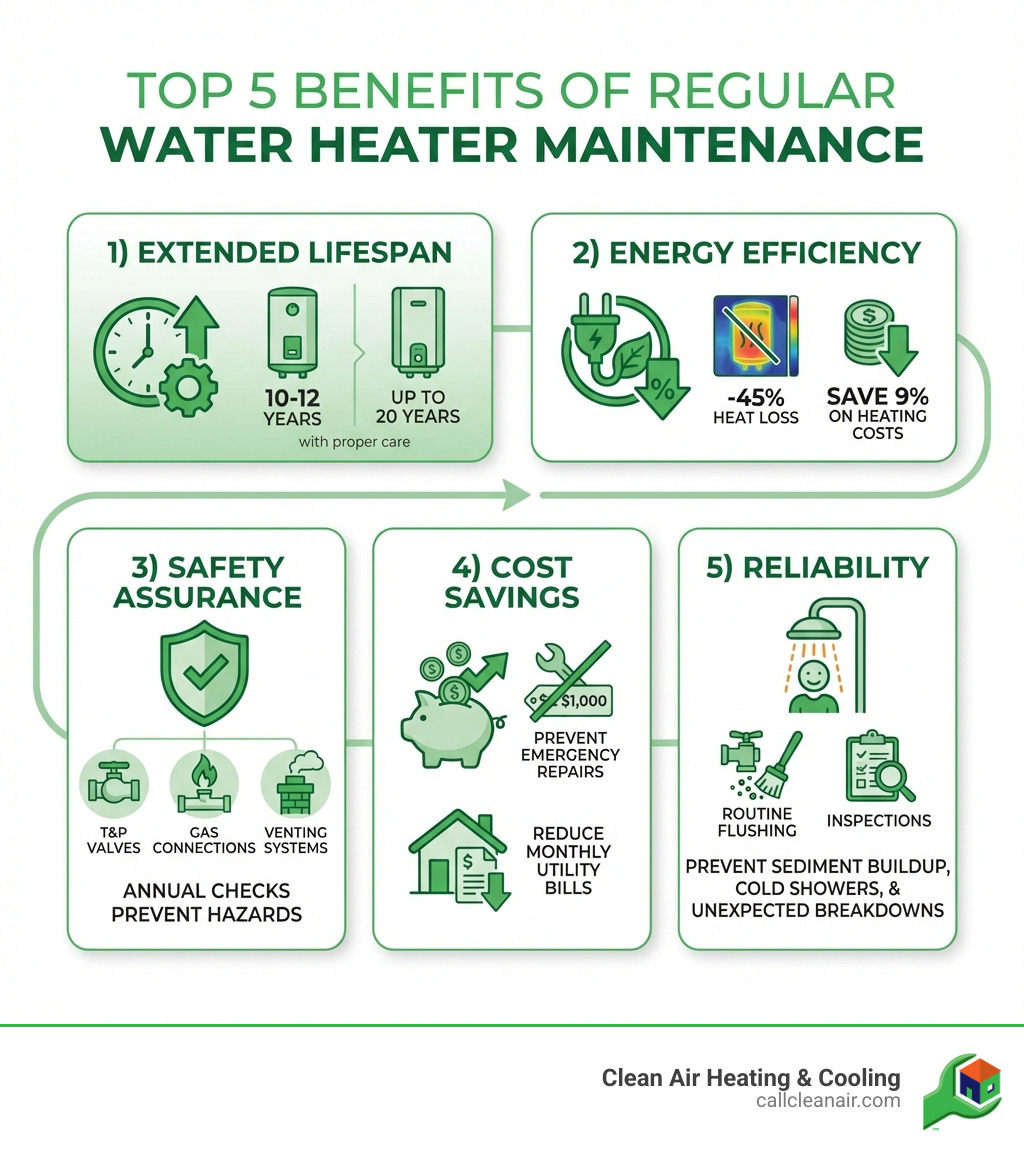
- Extended Lifespan: Routine maintenance can extend a tank water heater’s life to 10-12 years and a tankless model up to 20 years
- Lower Energy Bills: Proper maintenance reduces energy waste and can save you up to 9% on water heating costs
- Prevent Costly Repairs: Catching small issues early helps avoid emergency repairs that could cost over $1,000
- Improved Safety: Annual inspections ensure components like the T&P relief valve and gas connections function correctly
- Peace of Mind: Reduces the risk of waking up to cold showers or dealing with water damage from leaks
You hop in the shower expecting hot water—but get a freezing surprise instead. That scenario is exactly what regular water heater maintenance aims to prevent. Your water heater works hard year-round, providing warm baths, clean dishes, and comfortable showers. Yet most homeowners never think about it until something goes wrong.
The real question isn’t whether maintenance matters—it’s whether a formal maintenance plan is worth the investment. Some plans cost as little as a few dollars per month, while others bundle water heater service with HVAC coverage. Understanding what you’re paying for and what you’re getting in return is essential for making a smart decision.
The difference between proactive care and reactive repairs is significant. Flushing sediment every six months prevents clogs and efficiency loss. Inspecting the anode rod every few years protects your tank from corrosion. Testing the temperature and pressure relief valve ensures your system won’t overheat. These tasks sound simple, but skipping them can lead to premature failure, higher utility bills, and expensive emergency calls.
I’m Colin Matei, Owner and President of Clean Air Heating & Cooling, and over the years I’ve seen how a solid water heater maintenance plan transforms reliability and comfort for families across Whatcom and Skagit counties. Our team has helped countless homeowners avoid costly surprises by catching small issues before they become major problems.
What’s Included in a Professional Water Heater Maintenance Plan?
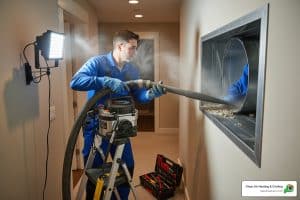
When you invest in a professional water heater maintenance plan, you’re buying more than just a quick check-up; you’re securing a comprehensive service designed to optimize your system’s performance, extend its life, and ensure your family’s safety. Our experienced technicians follow a meticulous checklist that can include up to 28 points, covering every critical aspect of your water heater.
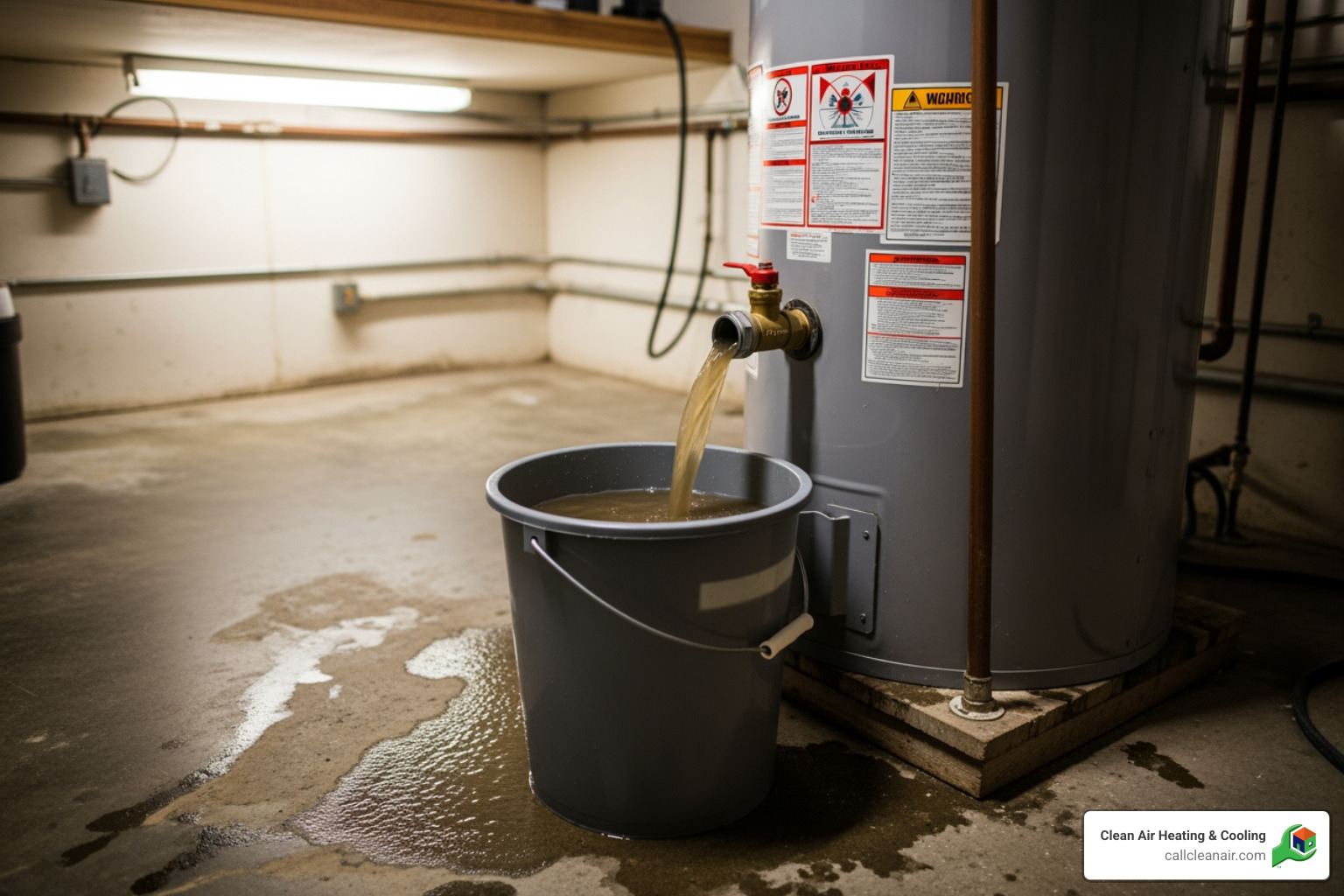
An annual service typically involves a thorough inspection and tune-up, addressing both the immediate operational efficiency and the long-term health of your unit. This proactive approach helps us identify potential issues before they escalate into costly breakdowns. We focus on safety inspections to ensure components like the temperature and pressure (T&P) relief valve and gas connections (for gas models) are functioning correctly, preventing dangerous situations. Efficiency tuning is also a key component, aiming to reduce energy waste and lower your utility bills.
For more detailed information on our water heater services, including installation and repair, visit our More info about water heater services.
Key Maintenance Tasks for All Water Heaters
Regardless of whether you have a tank or tankless unit, certain maintenance tasks are universally important for ensuring optimal operation and longevity. Our professional water heater maintenance plan includes these essential tasks:
- Flushing Sediment: This is crucial, especially for tank water heaters. Over time, minerals in the water (like calcium and magnesium, particularly in hard water areas) settle at the bottom of the tank, forming sediment. This buildup reduces heating efficiency, can cause strange noises, and even lead to premature tank failure. Flushing the tank regularly removes this sediment, helping your unit operate more efficiently and quietly. For gas water heaters, flushing the tank is especially important.
- Testing the Temperature & Pressure (T&P) Relief Valve: This is a vital safety component. The T&P valve automatically opens if the temperature or pressure inside the tank exceeds safe limits (typically 210°F or 150 psi), preventing the tank from exploding. We test this valve annually to ensure it’s not stuck and can function properly in an emergency. If it drips persistently, it might indicate high water pressure or thermal expansion, which we can then address.
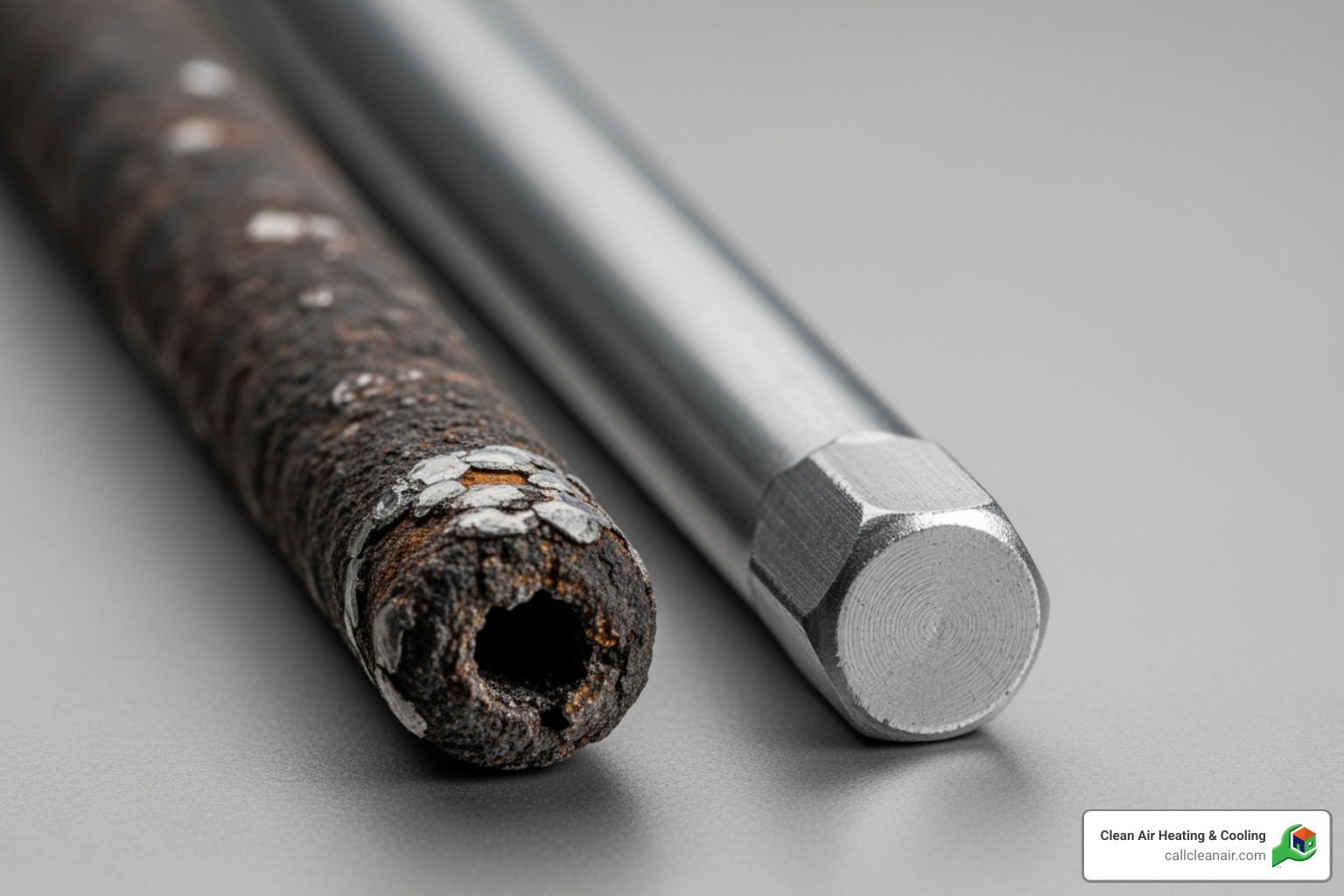
- Inspecting the Anode Rod: Often called the “sacrificial anode rod,” this metal rod (usually magnesium, aluminum, or zinc) is designed to corrode before the steel tank does. It attracts corrosive elements in the water, protecting the tank’s interior lining. We inspect the anode rod, typically every 3-5 years, and recommend replacement if it’s less than half an inch thick or heavily coated with calcium, as its protective capacity would be diminished. This simple replacement can significantly extend your tank’s life.
- Checking Thermostat Settings: We verify that your thermostat is set to an optimal temperature, usually around 120°F. Setting it too high wastes energy (potentially $36 to $61 annually in standby heat losses if set to 140°F) and increases the risk of scalding. Setting it too low can promote bacterial growth.
- Inspecting for Leaks or Corrosion: Our technicians carefully check all connections, valves, and the tank itself for any signs of leaks, rust, or corrosion. Catching these issues early can prevent significant water damage and extend the life of your unit.
For more insights into caring for your water heater, you can refer to resources like How to Care for Your Water Heater.
Tank vs. Tankless: How Maintenance Differs
While some maintenance tasks apply to both, the specific needs of traditional tank water heaters and modern tankless units diverge significantly.
Traditional Tank Water Heater Maintenance:
These systems store a set amount of hot water in a large tank, constantly heating it to maintain temperature. Because of this, they are more susceptible to:
- Anode Rod Corrosion: As mentioned, the anode rod is crucial for tank protection. Regular inspection and timely replacement are vital to prevent the tank itself from corroding.
- Sediment Buildup: Minerals in the water settle at the bottom of the tank. This sediment acts as an insulator, forcing the heating element or burner to work harder, reducing efficiency, and potentially leading to overheating and tank damage. Regular flushing is the primary defense against this. We recommend flushing at least annually, and more frequently if you have particularly hard water in your area.
- General Wear and Tear: Components like heating elements (electric), burners (gas), and various valves can wear out over time. Our maintenance includes inspecting these for signs of degradation.
Tankless Water Heater Maintenance:
Tankless water heaters heat water on demand, meaning they don’t store hot water. This design makes them highly efficient and gives them a longer lifespan (up to 20 years with routine maintenance). However, they have their own unique maintenance requirements:
- Descaling Mineral Buildup: While they don’t have a tank for sediment to accumulate in, tankless units are highly susceptible to mineral buildup (scale) within their heat exchanger. Hard water contains minerals like calcium and magnesium that can restrict water flow and reduce heating efficiency. Annual descaling with a proper solution is essential to keep the system running effectively.
- Cleaning Inlet Filters: Tankless water heaters often have inlet filters to prevent debris from entering the unit. These filters can become clogged, reducing water flow and efficiency. Regular cleaning or replacement of these filters is part of a tankless maintenance routine.
- Vent Inspection: Tankless heaters often use high-efficiency sealed vent systems to expel exhaust gases. These need to be checked yearly for blockages, corrosion, or loose connections. A compromised vent not only affects performance but can also pose safety concerns due to improper gas ventilation.
- Error Code Diagnostics: Modern tankless units come with advanced diagnostic systems that display error codes. Our technicians can interpret these codes to quickly identify and address issues during a tune-up.
Understanding these differences is key to choosing the right water heater maintenance plan for your specific unit. For a deeper dive into the distinctions between these systems, read our Tank vs Tankless Water Heater guide.
The Real Value: Cost Savings vs. Plan Price
Is a water heater maintenance plan truly a sound investment, or just another recurring bill? When we look at the numbers and the benefits, the value becomes clear. A maintenance plan is often a proactive measure that saves you money in the long run by preventing costly repairs and extending the life of your equipment.
Here’s a comparison of typical monthly plan costs versus the potential expenses of common emergency repairs:
| Issue Type | Average Repair Cost (without plan) | Monthly Maintenance Plan Cost (approx.) |
|---|---|---|
| No Hot Water (diagnosis) | $100 – $300+ | $10 – $30 |
| Element Replacement | $200 – $600 | $10 – $30 |
| Gas Valve Replacement | $300 – $800+ | $10 – $30 |
| Tank Leak / Replacement | $800 – $2,000+ | $10 – $30 |
| Anode Rod Replacement | $150 – $300 | $10 – $30 |
| T&P Valve Replacement | $100 – $250 | $10 – $30 |
| Tankless Descaling | $200 – $400 | $10 – $30 |
This table illustrates a critical point: while a maintenance plan involves a consistent, predictable cost, it can help you avoid much larger, unexpected expenses. Furnace repairs alone could cost over $1,000, making preventative maintenance a cost-effective way to avoid such surprises.
For a comprehensive look at water heater repair issues, consult our Water Heater Repair Complete Guide.
Unpacking the Benefits: More Than Just Money
Beyond avoiding immediate repair costs, a water heater maintenance plan offers a cascade of benefits that impact your comfort, budget, and even the safety of your home.
- Increased Lifespan: We’ve seen it time and again: a well-maintained water heater lasts significantly longer. A traditional tank water heater, with routine maintenance, can last 10 to 12 years. Tankless models, with their specific annual descaling and inspection, can function for up to 20 years. This means delaying the significant expense of a full unit replacement for as long as possible.
- Improved Energy Efficiency: When your water heater is clean and operating optimally, it doesn’t have to work as hard to heat water. Sediment buildup in tank heaters acts as an insulator, forcing the unit to consume more energy. Similarly, scale in tankless units reduces their efficiency. Regular maintenance, including flushing and descaling, ensures your unit heats water with less effort. Adding insulation to an older water heater can reduce heat loss by up to 45 percent, and setting the thermostat to 120 degrees Fahrenheit (instead of 140 degrees) can save $36 to $61 annually in standby heat losses alone, potentially shaving as much as 9 percent off water-heating costs.
- Reduced Utility Bills: The direct result of improved energy efficiency is lower monthly utility bills. That 9% reduction in water heating costs adds up over a year, putting money back in your pocket.
- Improved Home Safety: Water heaters, especially gas models, involve combustible fuels and high water pressure. Regular inspections ensure that all safety mechanisms, like the T&P relief valve and gas lines, are working correctly. This prevents common issues like overheating, leaks, or even dangerous gas leaks, protecting your home and family.
- Peace of Mind: Knowing that your water heater is regularly checked by professionals brings invaluable peace of mind. You’re less likely to experience sudden breakdowns, cold showers, or the stress of unexpected repair bills. This allows you to simply enjoy reliable hot water, day in and day out.
For more tips on saving energy with your water heater, visit the Lower water heating temperature page from the U.S. Department of Energy.
Understanding the Cost of a Water Heater Maintenance Plan
The cost of a water heater maintenance plan can vary, but it’s generally structured to be an affordable, predictable expense that outweighs the potential costs of neglect. While we cannot provide specific pricing, we can discuss general ranges and types of plans available.
Typical monthly or annual costs for a maintenance plan usually fall within a range that makes them accessible for most homeowners, often comparable to a few specialty coffee drinks or a streaming service subscription each month.
There are generally a few types of plans to consider:
- Maintenance-Only Plans: These plans focus purely on the preventative service, covering the annual inspection, cleaning, and tune-up tasks we’ve discussed. They aim to keep your unit running efficiently and catch problems early.
- Protection Plans with Repair Coverage: Some plans offer a hybrid approach, combining preventative maintenance with a degree of repair coverage. These might include parts and labor for certain repairs, often with no deductible or hidden costs. They act as a form of insurance against unexpected breakdowns.
- Bundled HVAC Plans: Many HVAC companies, including ours, offer comprehensive home comfort plans that bundle water heater maintenance with heating and cooling system maintenance. These can provide significant savings and a holistic approach to your home’s essential systems.
- No-Deductible Policies: A key feature of many protection plans is that they cover eligible repairs without requiring you to pay a deductible, making emergency fixes far less stressful on your wallet.
When evaluating the cost, remember to weigh it against the potential for unexpected major repairs, reduced energy efficiency over time, and the inconvenience of a malfunctioning water heater. The small, regular investment in a water heater maintenance plan can be a smart financial decision for your home in Bellingham, WA, and surrounding areas.
DIY vs. Professional Service: Who Should Handle the Upkeep?
We believe in empowering homeowners with knowledge, but we also advocate for professional expertise when it comes to complex home systems like your water heater. There’s a clear line between what you can safely and effectively do yourself and when it’s time to call in the pros.
Many basic maintenance tasks can be handled by a homeowner with a bit of know-how. However, tasks involving gas lines, high-voltage electricity, or complex internal components are best left to licensed and experienced technicians. Safety is our top priority, and we’d never want you to put yourself or your home at risk.
For a deeper understanding of water heater intricacies, our Water Heater Experts Complete Guide is an excellent resource.
DIY Maintenance You Can (and Should) Do
Empowering yourself with some basic water heater maintenance can extend its life and help you spot issues early. Here are a few tasks you can confidently tackle:
- Visual Inspections: Regularly check around your water heater for any signs of leaks, rust, or corrosion on the tank, pipes, and valves. Also, ensure the area around the unit is clear of clutter or flammable materials.
- Checking the T&P Valve: You can test the T&P valve annually. Simply place a bucket under the discharge pipe, gently lift the test lever for a few seconds until water comes out, then release it. The valve should snap shut. If it continues to drip, it might need professional attention.
- Adjusting the Thermostat: While we recommend an optimal setting of 120°F, you can adjust your thermostat if you notice the water is too hot or not hot enough. For gas heaters, there’s usually a dial on the tank. For electric, you might need to turn off the power at the breaker and access the thermostat behind a panel. Remember to adjust in small increments and wait a few hours to check the new temperature. For specific adjustments related to mixing valves, which regulate hot water temperature at the tap, you can learn more in our guide on Hot Water Heater Mixing Valve Adjustment.
- Keeping the Area Clear: Ensure there’s adequate clearance (typically two feet) around your water heater for proper ventilation and safe access. This is especially important for gas models to prevent combustion air issues.
When a Professional Water Heater Maintenance Plan is Non-Negotiable
While DIY can cover the basics, there are critical tasks and situations where professional intervention is not just recommended, but essential for safety and optimal performance. This is where a water heater maintenance plan truly shines.
- Gas Water Heaters: Any work involving gas lines or burners should always be performed by a qualified professional. Gas leaks are extremely dangerous, and improper handling can lead to serious accidents. Our technicians are trained to safely inspect and maintain gas connections, pilot lights, and venting systems.
- Complex Electrical Components: Electric water heaters involve high voltage. Unless you are a licensed electrician, leave electrical inspections, element replacement, or wiring checks to the experts.
- Anode Rod Replacement: While you can inspect the anode rod yourself (if you’re comfortable draining some water), replacing it often requires specialized tools, like an impact wrench and a specific size deep-well socket, to unscrew the old rod. It also involves partially draining the tank and ensuring proper sealing upon reinstallation.
- Signs of Major Corrosion or Leaks: If you notice significant rust, persistent leaks from the tank itself, or continuous dripping from the T&P valve that doesn’t stop after testing, it’s time to call us immediately. These can indicate serious problems requiring repair or even replacement.
- Lack of Time or Expertise: Let’s be honest, life in Whatcom, Skagit, Snohomish, and San Juan Counties is busy! If you don’t have the time, the right tools, or simply aren’t comfortable performing these tasks, a professional water heater maintenance plan is the perfect solution. Our technicians handle everything, giving you peace of mind and freeing up your valuable time.
- Tankless Water Heater Descaling: Descaling a tankless water heater involves circulating a specialized cleaning solution through the unit to remove mineral buildup. This process requires specific equipment and knowledge to do correctly and safely, making it a professional-only task.
Professional maintenance ensures that every component is thoroughly checked, adjusted, and serviced according to manufacturer specifications, prolonging the life of your unit and maintaining your warranty.
Frequently Asked Questions about Water Heater Maintenance Plans
We get a lot of questions from homeowners across Northwest Washington about water heater maintenance. Here are some of the most common ones we hear, answered directly:
How often is water heater maintenance needed?
For optimal performance, safety, and longevity, we recommend annual professional water heater maintenance. During this yearly visit, our technicians perform a comprehensive inspection, cleaning, and tune-up.
In addition to annual professional service, there are some tasks you can do yourself more frequently:
- Semi-annual DIY checks: We suggest doing a visual inspection every two to three months.
- Flushing the tank: For traditional tank water heaters, flushing the tank every six months is highly beneficial to remove sediment buildup. If you live in an area with particularly hard water, you might even consider flushing it quarterly to prevent excessive mineral accumulation.
- Tankless descaling: Tankless water heaters require annual descaling to remove mineral buildup from the heat exchanger.
Regular attention, whether DIY or professional, significantly reduces the risk of unexpected issues.
Can a maintenance plan prevent all water heater problems?
While a water heater maintenance plan is incredibly effective at preventing most common issues and extending the life of your unit, it cannot guarantee immunity from every single problem. Think of it like regular oil changes for your car – they drastically reduce the chance of engine trouble and extend the vehicle’s life, but they can’t prevent every flat tire or fender bender.
What a maintenance plan does do is significantly reduce the risk of unexpected breakdowns and catastrophic failures. By catching small issues early – like a weakening anode rod, minor leaks, or sediment buildup – we can address them before they escalate into major, costly repairs or even premature unit replacement. It ensures that critical safety components are always functioning correctly, providing you with a safer and more reliable source of hot water.
Is a maintenance plan worth it for a new water heater?
Absolutely! A maintenance plan is arguably most valuable for a new water heater. Here’s why:
- Establishes a History of Professional Care: From day one, your new unit will have a documented history of proper maintenance. This can be crucial if you ever need to make a warranty claim.
- Ensures Optimal Efficiency from Day One: Even new units benefit from initial checks and adjustments to ensure they’re running at peak efficiency right away. This maximizes your energy savings from the start.
- Maintains Manufacturer’s Warranty: Many water heater manufacturers stipulate that regular professional maintenance is required to keep their warranty valid. Skipping maintenance could void your warranty, leaving you responsible for the full cost of repairs if something goes wrong.
- Prevents Early Wear and Tear: Starting a maintenance regimen early prevents the accumulation of sediment or scale that can begin to affect even new units, especially in areas with hard water. This proactive approach helps your new water heater live up to its maximum potential lifespan.
Investing in a water heater maintenance plan for a new unit is a smart decision that protects your investment and ensures years of reliable hot water.
Secure Your Comfort and Savings Today
We’ve explored the ins and outs of water heater maintenance plans, from the specific tasks involved to the tangible benefits they offer. It’s clear that these plans are far from a pricey perk; they are a prudent investment in your home’s comfort, safety, and financial well-being.
By embracing proactive care over reactive repairs, you stand to gain significantly:
- Longevity: Extend the life of your water heater by years, delaying the need for costly replacement.
- Efficiency: Keep your unit running at peak performance, translating into lower energy consumption and reduced utility bills.
- Safety: Ensure all critical components are functioning correctly, protecting your home and family from potential hazards.
- Peace of Mind: Enjoy consistent, reliable hot water without the stress of unexpected breakdowns.
For homeowners in Whatcom, Skagit, Snohomish, and San Juan counties, Clean Air Heating & Cooling provides expert water heater services, including comprehensive water heater maintenance plans. Our team of skilled technicians is dedicated to delivering prompt, high-quality service, ensuring your home systems are always running smoothly. We pride ourselves on our 25% utility savings guarantee and over 480 5-star Google reviews, reflecting our commitment to customer satisfaction.
Don’t wait for a cold shower to remind you of your water heater’s importance. Secure your comfort and savings today with a professional maintenance plan.
Ready to ensure your water heater is always performing its best? Learn more about our HVAC services, including water heaters, and schedule your maintenance today by visiting our HVAC Services: Water Heaters page.