When to Replace Your Furnace: 7 Urgent Signs
Why Knowing When to Replace Your Furnace Can Save You Money and Stress
Deciding when to replace furnace shouldn’t wait until you’re left in the cold. Homeowners typically face this choice when their heating system is 15-20 years old or showing clear signs of decline. Being proactive can save you from emergency costs that often run 50% higher than planned installations.
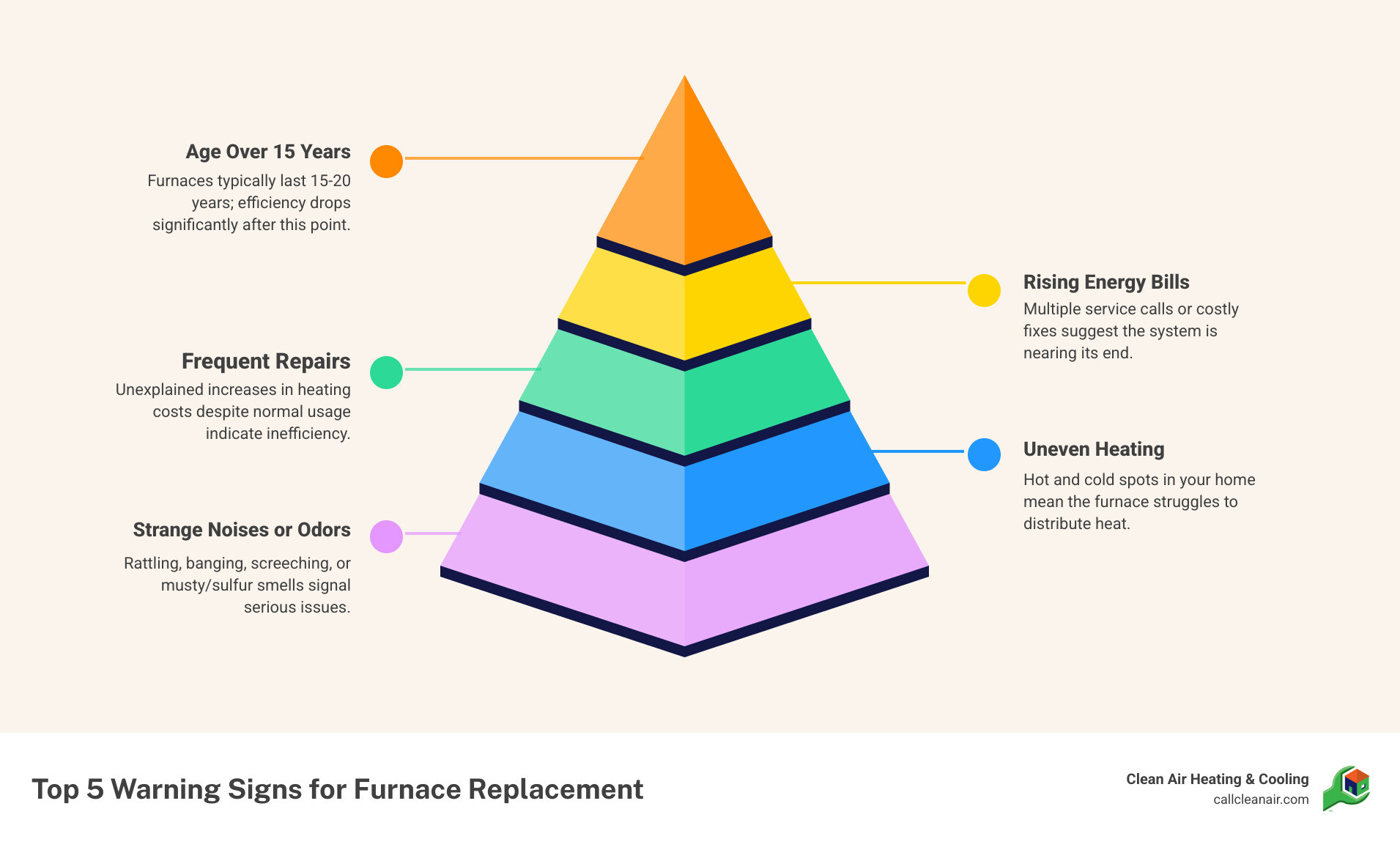
Here are the key indicators it’s time for a furnace replacement:
- Age: Your furnace is 15+ years old
- Rising energy bills despite normal usage
- Frequent repairs (multiple service calls per year)
- Uneven heating throughout your home
- Strange noises like rattling, popping, or screeching
- Yellow burner flame instead of blue (safety concern)
- Poor air quality with excessive dust or dry air
As one industry expert noted: “Old furnaces tend to go belly-up on the coldest day of the year.”
The average furnace lasts 15-20 years, but its efficiency drops significantly over time. Modern units operate at 95-98% efficiency, while older models may only reach 65-80%.
I’m Colin Matei, Owner and President of Clean Air Heating & Cooling. I’ve seen that Bellingham homeowners who plan for replacement enjoy better comfort, lower energy bills, and less stress.
Related Links:
Understanding Your Furnace’s Lifespan and Age
Like any major appliance, your furnace has a limited lifespan. Understanding its age is crucial for deciding when to replace furnace systems before they fail.
A well-maintained furnace typically lasts between 15 to 20 years, according to Carrier’s industry research. Gas furnaces usually fall within this 15-20 year range, while electric furnaces can sometimes last up to 25 years with proper care.
To find your furnace’s age, check the serial number on the unit; a quick online search can help you decode the manufacturing date.
How Regular Maintenance Extends Furnace Life
Regular maintenance is the key to a long-lasting heating system. Annual tune-ups allow technicians to clean components, check for wear, and catch small problems before they become major breakdowns.
Filter changes are also vital. A clogged filter forces your furnace to work harder, leading to premature wear and higher bills. Check your filter monthly and replace it every 90 days (or more often if you have pets).
Consistent upkeep can prevent breakdowns and add years to your furnace’s life. For a complete guide, see our Furnace Maintenance Checklist. You can also learn more in our guide on How to Extend the Life of Your Furnace.
The Impact of Age on Efficiency
Age directly impacts your wallet through your furnace’s AFUE rating (Annual Fuel Utilization Efficiency). This rating shows how much fuel is converted to heat.
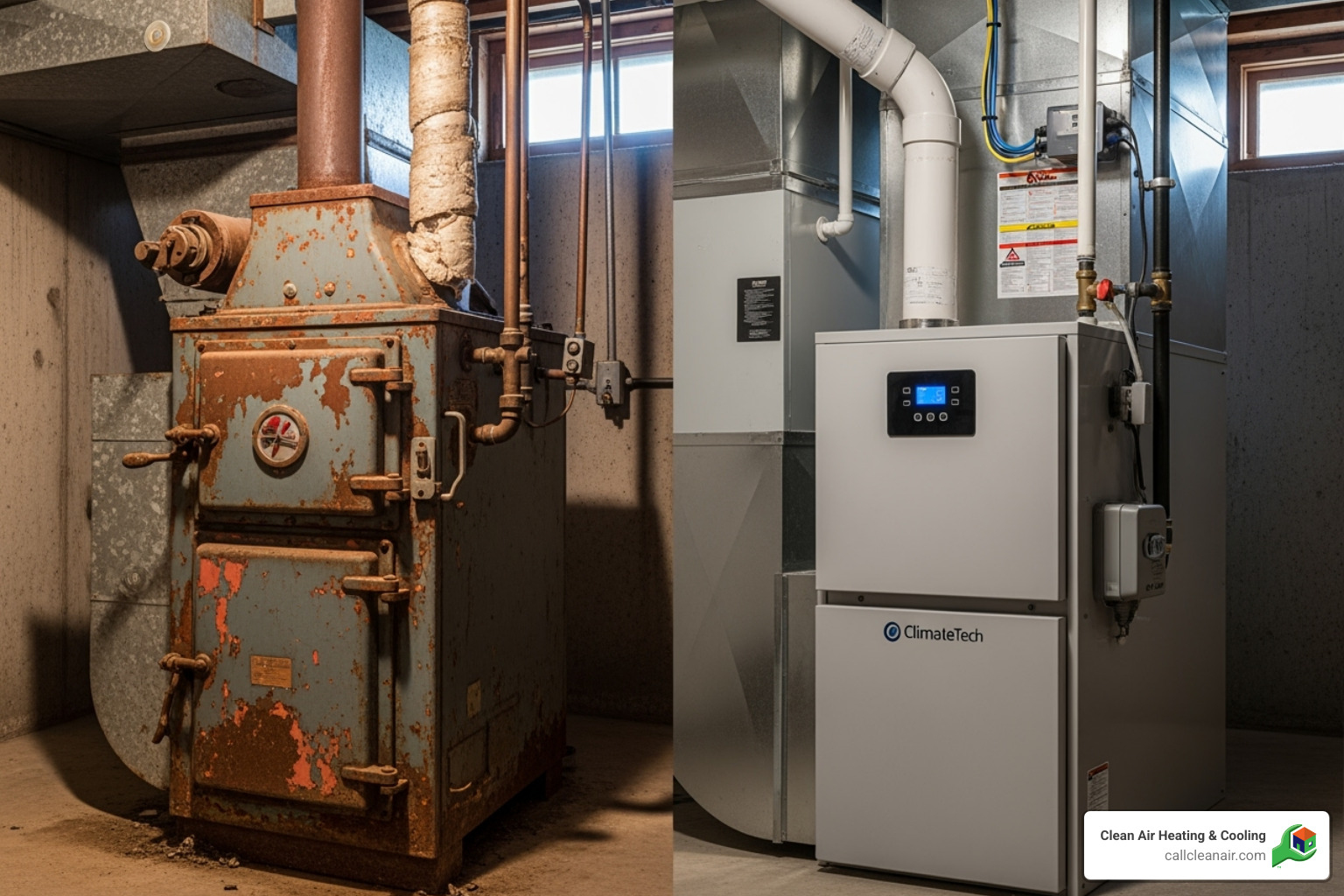
Older models from 15-20 years ago often have a 65-80% AFUE, meaning up to 35 cents of every dollar is wasted. In contrast, modern high-efficiency units achieve 95-98% AFUE. The Department of Energy confirms that older furnaces are less efficient.
The energy savings from upgrading can be substantial, helping the new unit pay for itself over time.
When you’re weighing when to replace furnace systems, efficiency isn’t just about being environmentally responsible. It’s about putting money back in your pocket every month.
Key Signs: How to Know When to Replace Your Furnace
Your furnace will often give you warning signs before it completely fails. Recognizing these signals early allows you to plan for a replacement without the stress and high cost of an emergency breakdown.
Being proactive means you can research options, compare models, and schedule the installation at your convenience. If you notice any issues, our guide on Signs My HVAC System Needs Repair can help.
Here are the seven key warning signs that it’s time to start thinking about a new furnace:
- Your energy bills are increasing without explanation
- You’re facing frequent and costly repairs
- Your home has uneven heating throughout
- The furnace is making strange noises
- There are visible signs of wear or moisture
- Your burner flame is yellow instead of blue
- Your home’s air quality is declining
When you start noticing multiple signs from this list, it’s your furnace’s way of telling you that its best days are behind it. Let’s walk through each of these warning signs so you’ll know exactly what to watch for in your own home.
1. Your Energy Bills Are Increasing
Rising energy bills are often the first sign that it’s time to think about when to replace your furnace. If your heating costs are climbing despite normal usage, your furnace’s declining efficiency is likely the cause.
As internal components wear down, the system must run longer and consume more fuel to heat your home. Compare this winter’s utility bills to last year’s. A consistent increase of 15-20% or more is a clear red flag that your furnace is working overtime.
This early warning sign gives you time to plan for a replacement before a complete breakdown. If you’re curious about other factors that might be driving up your energy costs, you can explore more about higher energy bills.
2. You’re Facing Frequent and Costly Repairs
If you’re calling for furnace repairs more and more often, it’s a strong signal to consider when to replace your furnace. Furnaces typically require the most repairs in their final two years of life, and what starts as a simple fix can quickly become a series of expensive breakdowns.
Some components are particularly costly to fix. The heat exchanger is the most expensive part to replace. Labor costs for this repair can be substantial, even if the part is under warranty.
This is where the 50% rule is a helpful guide. Consumer Reports suggests that if the cost of repairs approaches 50% of a new unit’s value, replace it. It’s a simple way to avoid throwing good money after bad.
Multiple service calls within a single heating season are a clear red flag that your system is ready to retire. For more on repair costs, you can learn more about Furnace repair costs.
3. Your Home Has Uneven Heating
If your living room is cold while your bedroom feels like a sauna, your furnace is likely failing. Uneven heating is a clear sign that your system can no longer distribute heat effectively, creating frustrating hot and cold spots throughout your home.
This can be caused by a struggling blower motor, an improperly sized system, or simply worn-out components that can’t produce consistent heat. No amount of adjusting the thermostat can fix a furnace that is fundamentally unable to do its job.
If your home has multiple climate zones instead of consistent comfort, your furnace is telling you it’s time to consider replacing it.
4. The Furnace is Making Strange Noises
When your furnace starts making unusual noises, it’s time to pay attention. A healthy furnace should operate quietly, so these sounds are often distress signals that something is wrong.
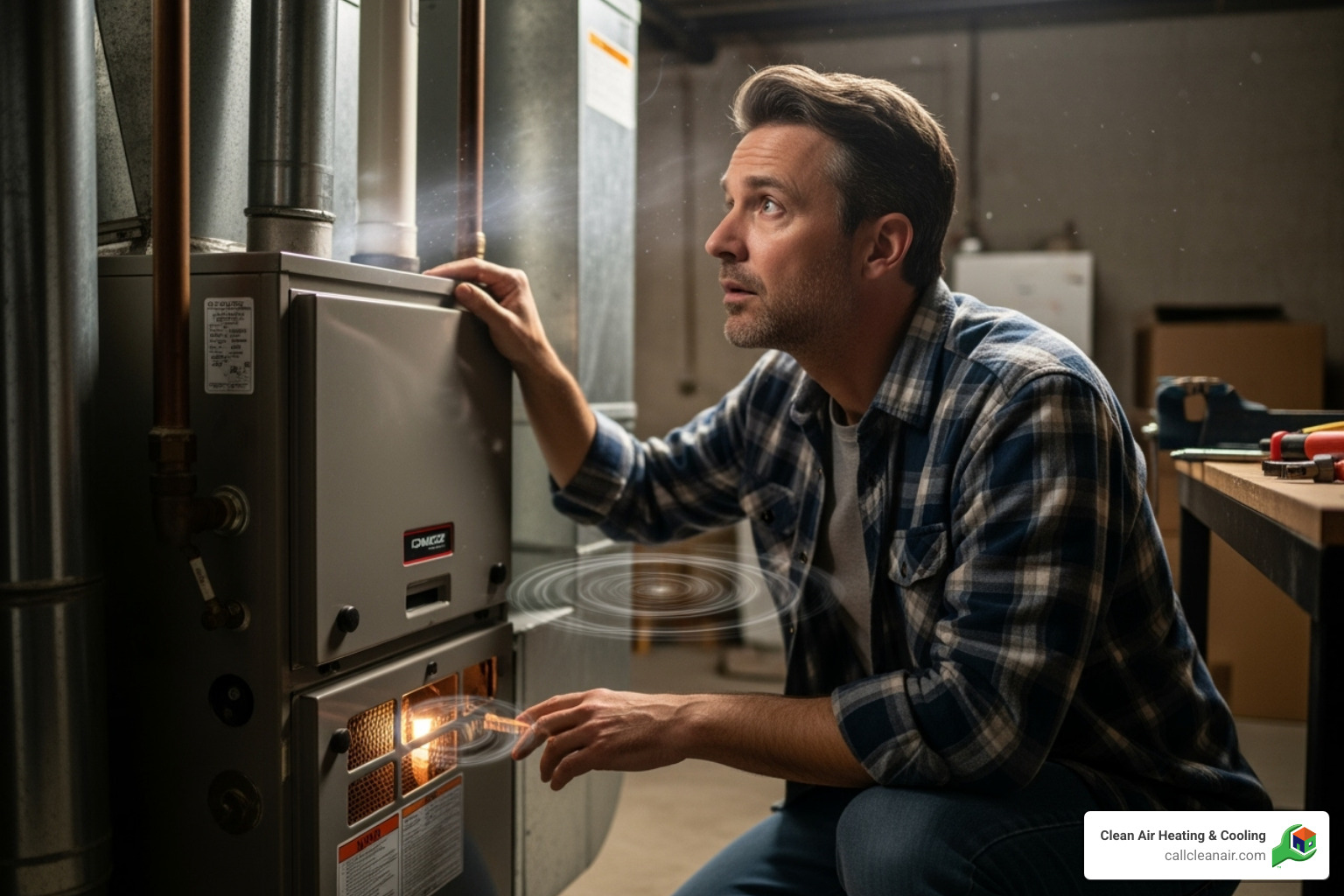
- Rattling can indicate loose panels or, more seriously, a cracked heat exchanger.
- Popping or banging may point to delayed ignition, where gas builds up before igniting.
- Screeching or squealing often signals a problem with the blower motor or a worn belt.
- A loud humming that is new or has increased in volume can suggest electrical issues.
- Repeated clicking could mean a problem with the igniter or flame sensor.
These noises are clear warnings that your furnace needs attention. When considering when to replace your furnace, persistent strange noises on an older system often mean replacement is a wiser choice than expensive repairs.
5. There Are Visible Signs of Wear or Moisture
A visual inspection of your furnace can reveal clear signs of deterioration that tell you when to replace your furnace. Look for these warning signs:
- Rust and corrosion on the cabinet or around the base indicate moisture problems that can lead to serious damage.
- Cracks in the furnace components, especially the heat exchanger, are a major safety hazard that can leak carbon monoxide into your home.
- Soot accumulation around registers or inside the unit points to incomplete combustion and poor performance.
- Water leaks or excessive condensation can signal a blocked condensate line or a more serious internal failure.
If you see any of these signs, especially cracks or soot, it’s time for a professional assessment. These issues only worsen over time and can compromise your family’s safety.
6. Your Burner Flame is Yellow, Not Blue
This is a warning sign that requires immediate action. If your gas furnace’s burner flame is yellow or orange instead of blue, it’s a critical safety issue you should not ignore.
A healthy furnace has a steady, blue flame, indicating complete and safe combustion. A yellow flame means incomplete combustion, which produces carbon monoxide (CO), an odorless, invisible, and deadly gas. This problem is more common in older, less efficient furnaces.
If you see a yellow flame:
- Turn off your furnace immediately.
- Open windows to ventilate your home.
- Evacuate everyone from the house.
- Call your gas company and an HVAC professional.
Always have working carbon monoxide detectors in your home, as carbon monoxide is a serious concern with older furnaces. A yellow flame is a safety hazard that makes furnace replacement an immediate priority.
7. Your Home’s Air Quality is Declining
An aging furnace can negatively impact your home’s indoor air quality, affecting your family’s health and comfort. Be aware of these signs:
- Excessive dust that settles quickly after cleaning may mean your furnace is circulating debris.
- Dry air that causes static shock, dry skin, and irritated sinuses can be worsened by an old furnace stripping moisture from the air.
- Soot particles near heating vents are a red flag for incomplete combustion, a serious safety and air quality issue.
- Stale or musty smells, especially when the furnace kicks on, can indicate mold in the system or ductwork.
While you should always check for clogged filters, if replacing them doesn’t solve the problem, it points to deeper issues. When poor air quality becomes a persistent problem, it’s a strong reason to consider when to replace furnace with a modern unit that has superior filtration.
The Big Decision: Repair or Replace?
After noticing the warning signs, you face the big question: repair or replace? While repairing may seem cheaper upfront, a cost-benefit analysis often shows that replacement offers better long-term value and peace of mind.
This table can help guide your decision on when to repair vs replace your furnace:
| Factor | Consider Repair | Consider Replace |
|---|---|---|
| Furnace Age | Under 15 years old | 15-20 years or older |
| Repair Cost | Under 30% of new unit cost | Approaches or exceeds 50% of new unit cost |
| Frequency of Repairs | First or second repair | Frequent, recurring breakdowns |
| Efficiency | Low energy bills | High energy bills |
| Component Failure | Minor part (sensor, igniter) | Major component (heat exchanger, motor) |
| Safety Concerns | None | Yellow flame, CO risk, cracks |
For a deeper dive, see our guide: Should I Repair or Replace My Old HVAC System?.
When to Repair Your Furnace
Repair is often the right choice if your furnace is under 15 years old and has been well-maintained. Minor, inexpensive fixes for issues like a faulty thermostat or a single failed component in an otherwise healthy system make financial sense. A repair may also be the best option if you plan to sell your home in the near future.
When to Replace Your Furnace
Replacement is the clear choice in several scenarios. The golden rule is: if repair costs exceed 50% of the replacement cost, it’s time to replace. The Consumer Reports suggests that if the cost of repairs approaches 50% of a new unit’s value, replace it.
If your furnace is over 15-20 years old, it’s living on borrowed time. Major component failures, like a cracked heat exchanger, or any safety concerns, such as a carbon monoxide leak, make replacement necessary. Finally, if you want to lower energy bills with a more efficient system, replacement is the only way forward.
Benefits and Costs of a New High-Efficiency Furnace
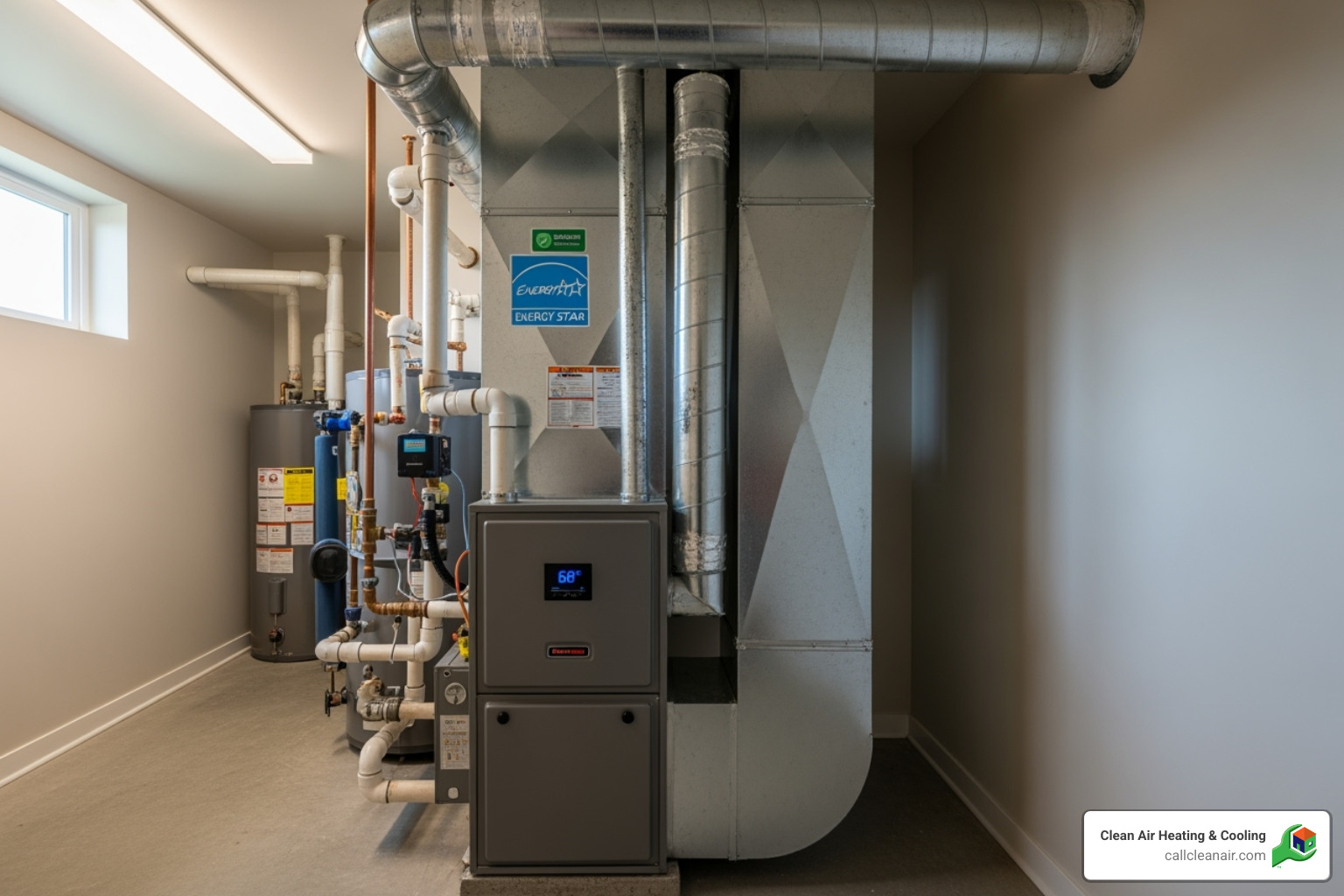
Once you’ve decided to replace furnace, you can look forward to the many benefits of a new, high-efficiency system. This investment pays off in comfort, savings, and peace of mind.
Understanding Replacement Costs
The cost of a new furnace depends on several factors:
- Furnace Type and Efficiency: High-efficiency gas units (95-98% AFUE) are a top choice, while electric furnaces may cost less upfront.
- Installation Complexity: The cost will vary depending on whether your existing ductwork needs modification.
- Capacity (BTU Rating): We perform load calculations to ensure your furnace is sized correctly for your home.
- Brand and Features: Costs vary based on the brand and any advanced features like variable-speed blowers or smart thermostat compatibility.
As specialists in Bellingham Furnace Installation, we provide transparent pricing. Contact us for a Furnace Repair Free Estimate.
The Advantages of Upgrading
A new furnace offers significant advantages:
- Lower Utility Bills: Upgrading from an 80% AFUE model to a 95% model can cut fuel waste dramatically.
- Improved Comfort: Modern furnaces provide even, consistent heat, eliminating hot and cold spots.
- Quieter Operation: New systems run much more quietly than older, noisy units.
- Better Indoor Air Quality: Advanced filtration systems capture more dust, pollen, and other allergens.
- Increased Home Value: A new, efficient furnace is an attractive feature for potential buyers.
- Reduced Carbon Footprint: High-efficiency units use less fuel, which is better for the environment.
- Improved Safety Features: Modern furnaces have advanced safety controls to protect your family.
- Smart Thermostat Compatibility: Control your heating remotely for added convenience and savings.
We can also help you find Rebates for HVAC Upgrades to make your new furnace more affordable.
Frequently Asked Questions about Furnace Replacement
Here are answers to some of the most common questions homeowners ask when deciding when to replace their furnace.
What is the average lifespan of a furnace?
A well-maintained furnace typically lasts 15 to 20 years. Gas models are often in this range, while electric units can sometimes last longer. Regular annual maintenance is the single most important factor in maximizing its lifespan.
What is the most expensive part to fix on a furnace?
The heat exchanger is the most expensive component to replace. A crack in this part is a serious safety hazard. Even if the part is under warranty, the extensive labor required makes the repair very costly. The blower motor and control board are also expensive fixes.
Should I replace my furnace before it completely fails?
Yes, absolutely. Proactive replacement saves you from the stress and higher costs of an emergency breakdown during the coldest time of year. Planning ahead gives you time to research options, find the best system for your home, and schedule the installation conveniently.
Don’t Wait for a Breakdown—Get Expert Advice
Don’t wait for a no-heat emergency on the coldest night of the year. Understanding when to replace furnace puts you in control of your home’s comfort and safety.
Key warning signs like rising energy bills, frequent repairs, strange noises, a yellow burner flame, or a decline in air quality all indicate that your furnace is nearing the end of its life.
Proactive planning is always better than a reactive emergency. It allows you to research your options, take advantage of rebates, and avoid the premium costs of an urgent replacement. Safety should always come first. Modern high-efficiency furnaces are not only more economical but are also built with advanced safety features that older models lack. The long-term savings on utility bills, combined with improved comfort and reliability, make a new furnace a wise investment.
At Clean Air Heating & Cooling, we’ve helped hundreds of families in Whatcom, Skagit, Snohomish, and San Juan Counties make these important decisions. We provide honest, expert advice custom to your home’s needs and your budget.
Don’t let an aging furnace compromise your comfort or safety. Contact us today to Get a free estimate on your HVAC services and take the first step toward reliable, efficient heating.